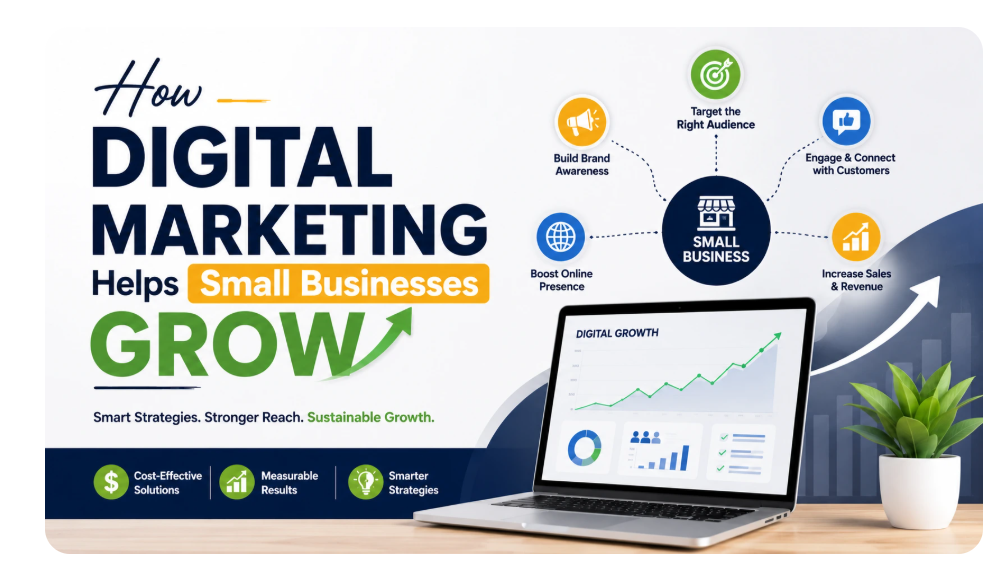
How Digital Marketing Helps Small Businesses Grow in 2026
Digital marketing has become one of the most important ways for small businesses to reach customers, build brand awareness, generate leads, and increase sales. Whether you operate a local business, professional service, online store, startup, or growing company, having a strong digital presence can help you compete in today's increasingly connected marketplace.
Traditional marketing methods can still be useful, but digital marketing gives small businesses the ability to reach highly targeted audiences, measure campaign performance, communicate directly with customers, and adjust marketing strategies based on real results.
From search engine optimization (SEO) and social media marketing to Google Ads, content marketing, email campaigns, and professional website development, businesses can use multiple digital channels to attract potential customers and build long-term growth.
Businesses looking to build fast, scalable, and SEO-friendly web applications can explore our Next.js development services in Hyderabad for modern web solutions.
What Is Digital Marketing?
Digital marketing refers to promoting a business, product, or service through online channels and digital technologies. Instead of relying only on traditional advertising such as newspapers, television, radio, or printed brochures, businesses can connect with customers through search engines, websites, social media platforms, email, online advertising, and other digital channels.
A successful digital marketing strategy usually combines multiple techniques based on the company's goals, target audience, industry, and budget. Some businesses may focus heavily on SEO, while others may benefit more from social media marketing, paid advertising, content marketing, or a combination of several strategies.
Why Digital Marketing Is Important for Small Businesses
Small businesses often have limited marketing budgets compared with large companies. Digital marketing can provide more flexible and measurable opportunities to reach potential customers. Instead of spending money trying to reach a broad audience, businesses can target specific locations, interests, search queries, demographics, and customer segments.
A strong online marketing strategy can help a small business become easier to discover, establish credibility, generate enquiries, and convert website visitors into customers.
1. Improve Online Visibility
One of the biggest benefits of digital marketing is increased online visibility. Customers frequently use search engines to find products, services, companies, and local businesses.
If your business website is properly optimized for relevant search terms, potential customers can discover your company when they are actively searching for what you offer.
Search engine optimization can involve improving website content, page titles, meta descriptions, internal links, technical performance, mobile usability, and other aspects of a website.
For example, a local web development company can optimize its website for relevant searches such as web development company, website development services, or location-specific searches. This can help the company reach people who are already interested in its services.
2. Reach the Right Target Audience
Digital marketing allows businesses to target specific audiences instead of communicating with everyone. This can make marketing campaigns more relevant and efficient.
Depending on the platform and campaign type, businesses may be able to target audiences based on factors such as location, interests, online behavior, search intent, demographics, and previous interactions with the business.
For example, a local business can focus its campaigns on customers within a particular city or service area. An e-commerce company can target people who are interested in specific product categories.
Better audience targeting can help businesses reduce wasted marketing expenditure and focus their efforts on potential customers who are more likely to engage with their products or services.
3. Generate More Qualified Leads
Lead generation is an important objective for many small businesses. Digital marketing provides several ways to attract potential customers and encourage them to make an enquiry.
SEO can bring organic visitors to a website, while Google Ads can help businesses appear for commercial search queries. Social media marketing can create awareness and engagement, and content marketing can answer questions that potential customers have before making a purchasing decision.
A well-designed landing page can further improve lead generation by clearly communicating the benefits of a product or service and providing a simple way for visitors to contact the business.
4. Build Brand Awareness
Customers are more likely to consider businesses that they recognize and trust. Digital marketing gives small businesses multiple opportunities to consistently communicate their brand message.
Regular social media posts, informative blog articles, videos, useful website content, email communication, and online advertising can help increase brand recognition.
Consistency is important. Businesses should maintain a consistent visual identity, tone of communication, messaging, and customer experience across their digital channels.
5. Build a Professional Business Website
A business website is often one of the most important parts of a digital marketing strategy. It acts as a central online destination where customers can learn about the company, explore its services, view previous work, read useful information, and contact the business.
A professional website should be responsive, fast, easy to navigate, secure, and optimized for search engines. It should also clearly communicate what the business offers and provide strong calls to action.
Mobile responsiveness is particularly important because many users access websites through smartphones and tablets. A website that works smoothly across different screen sizes can provide a better user experience.
6. Use SEO to Attract Organic Traffic
Search engine optimization (SEO) is a long-term digital marketing strategy that helps websites improve their visibility in search engine results.
SEO can include keyword research, content optimization, technical SEO, internal linking, image optimization, website performance improvements, local SEO, and building relevant authority.
For small businesses, SEO can be especially valuable because it can help attract users who are actively searching for relevant products and services.
Important SEO Areas for Small Businesses
- Keyword research and search intent
- High-quality website content
- Unique page titles and meta descriptions
- Proper heading structure
- Internal linking
- Mobile-friendly website design
- Fast page loading performance
- Local SEO optimization
- Useful and original blog content
- Technical SEO improvements
7. Use Social Media Marketing
Social media platforms allow businesses to communicate directly with their target audience. Depending on the industry, businesses can use platforms such as Instagram, Facebook, LinkedIn, YouTube, and other relevant channels to share information and build relationships.
Social media content can include educational posts, product demonstrations, customer stories, videos, company updates, industry insights, behind-the-scenes content, and promotional campaigns.
The objective should not always be to sell immediately. Providing useful information and building trust can help create a stronger relationship with potential customers over time.
8. Use Google Ads and Paid Advertising
SEO can take time to generate significant organic visibility. Paid advertising can provide businesses with another way to reach potential customers more quickly.
Google Ads can allow businesses to advertise for relevant search terms and direct users to specific landing pages. Businesses can also use social media advertising to reach targeted audiences.
However, paid advertising should be carefully planned. Businesses should define their target audience, campaign objectives, budget, keywords, landing pages, and conversion goals before launching campaigns.
9. Content Marketing Builds Long-Term Value
Content marketing involves creating and distributing useful information that is relevant to a target audience. Blog posts, guides, videos, case studies, infographics, FAQs, and educational resources can all form part of a content marketing strategy.
High-quality content can help businesses demonstrate expertise while also creating additional opportunities to appear in search results.
For example, a digital marketing company can publish detailed articles about SEO, Google Ads, website development, social media marketing, and online business growth. These resources can attract people searching for solutions to specific problems.
10. Improve Customer Trust and Credibility
Customers often research a company online before contacting or purchasing from it. A professional website, active social media presence, useful content, customer reviews, case studies, and clear business information can contribute to credibility.
Businesses should make sure that their website provides accurate information and makes it easy for visitors to understand the company's services, experience, contact information, and value proposition.
11. Measure Marketing Performance
Another major advantage of digital marketing is the ability to measure performance. Businesses can monitor website traffic, engagement, leads, conversions, advertising costs, and other important metrics.
For example, businesses can analyze which pages receive the most visitors, which marketing channels generate leads, and which campaigns produce the strongest results.
This information can help businesses make better decisions about where to invest their marketing budget.
12. Increase Customer Engagement
Digital channels make it easier for businesses to interact with customers. Social media comments, messages, email, contact forms, reviews, and other online communication channels provide opportunities to answer questions and collect feedback.
Fast and helpful communication can improve the overall customer experience and help businesses build stronger relationships with their audience.
13. Compete With Larger Businesses
Digital marketing can provide small businesses with opportunities to compete for online attention alongside larger companies. A small company can create valuable content, optimize its website for specific search queries, build a strong local presence, and develop a recognizable social media identity.
Instead of trying to compete for every possible keyword or audience, small businesses can focus on specific niches, locations, customer needs, and services where they can provide genuine value.
14. Improve Local Business Visibility
Local SEO is particularly useful for businesses that serve customers in specific geographic areas. Optimizing business information, creating location-specific content, maintaining accurate contact details, and building a strong online reputation can help businesses become more visible to local customers.
For example, a company serving customers in Hyderabad can create useful content focused on services and customer needs within Hyderabad rather than targeting a broad national audience.
15. Create a Long-Term Marketing Strategy
Digital marketing should not be treated as a one-time activity. Sustainable growth usually requires consistent content creation, SEO improvements, social media activity, advertising optimization, website improvements, and performance analysis.
Businesses should regularly review their results and adjust their strategy based on customer behavior and business objectives.
How to Create a Digital Marketing Strategy for a Small Business
Creating a digital marketing strategy does not have to be complicated. Businesses can start by understanding their objectives and target customers.
Step 1: Define Your Business Goals
Determine whether your primary goal is brand awareness, website traffic, lead generation, online sales, customer engagement, or a combination of these objectives.
Step 2: Identify Your Target Audience
Understand who your ideal customers are, what problems they have, what services they need, and how they search for solutions online.
Step 3: Build or Improve Your Website
Make sure your website is professional, mobile-friendly, fast, secure, easy to navigate, and optimized for conversions.
Step 4: Create Valuable Content
Publish useful content that answers your audience's questions and addresses their problems. Focus on quality and relevance instead of creating content only to insert keywords.
Step 5: Optimize for Search Engines
Use relevant keywords naturally throughout your website while maintaining useful, readable content. Improve technical SEO, internal linking, page speed, and mobile usability.
Step 6: Promote Your Content
Share useful content through social media, email marketing, online communities, and other relevant channels.
Step 7: Track Results
Monitor traffic, leads, conversions, engagement, and advertising performance. Use these insights to improve your strategy over time.
Common Digital Marketing Mistakes Small Businesses Should Avoid
- Creating content without understanding search intent
- Targeting too many keywords at once
- Ignoring mobile website performance
- Using low-quality or duplicate content
- Running paid advertising without tracking conversions
- Ignoring local SEO opportunities
- Posting inconsistently on social media
- Focusing only on traffic instead of qualified leads
- Not measuring marketing performance
- Expecting immediate results from every marketing channel
How Long Does Digital Marketing Take to Show Results?
The time required to see results depends on the strategy, industry, competition, website quality, budget, target audience, and consistency of execution.
Paid advertising can generate traffic and enquiries relatively quickly when campaigns are properly configured. SEO and content marketing are generally longer-term strategies that can require consistent effort before significant organic visibility is achieved.
For this reason, businesses should set realistic expectations and measure progress using meaningful performance indicators rather than expecting immediate results from every activity.
Conclusion
Digital marketing provides small businesses with practical ways to improve online visibility, reach targeted customers, generate leads, build credibility, and grow their businesses.
SEO, content marketing, social media marketing, Google Ads, professional website development, and local SEO can all contribute to a strong online presence when they are planned and executed strategically.
The most effective approach is to focus on the needs of your target audience, create genuinely useful content, maintain a professional digital presence, and continuously measure and improve performance.
For small businesses looking to grow online in 2026, investing in a well-planned digital marketing strategy can be an important step toward building sustainable long-term growth.
Frequently Asked Questions
What is digital marketing for small businesses?
Digital marketing for small businesses involves using online channels such as search engines, websites, social media, email, content marketing, and online advertising to reach customers and promote products or services.
Why is SEO important for small businesses?
SEO can help small businesses improve their visibility in search engine results and attract people who are actively searching for relevant products or services.
Which digital marketing strategy is best for a small business?
There is no single strategy that works for every business. SEO, content marketing, social media, Google Ads, local SEO, and website optimization can be combined based on the company's goals, audience, industry, and budget.
How can a small business generate leads online?
Small businesses can generate online leads through SEO, Google Ads, social media marketing, content marketing, landing pages, email marketing, and a conversion-focused website.
Does every small business need a website?
A professional website can provide a central online presence where customers can learn about a business, evaluate its services, and make enquiries. For many businesses, a website is an important part of their digital marketing strategy.
Is digital marketing expensive for small businesses?
Digital marketing budgets can vary significantly. Businesses can start with strategies such as organic SEO and content marketing and gradually invest in paid advertising and other channels as their goals and budget grow.